






The Core of mRNA Vaccines:Aseptic Filling Requirements for Cleanrooms
Pre-engineered cleanroom wall and cleanroom ceiling panel assemblies arrive fully tested, labeled, and ready for dry-fit assembly — eliminating on-site welding, curing delays, or field-adaptation errors.
The Critical Role of Cleanroom Wall Integrity in mRNA Vaccine Production
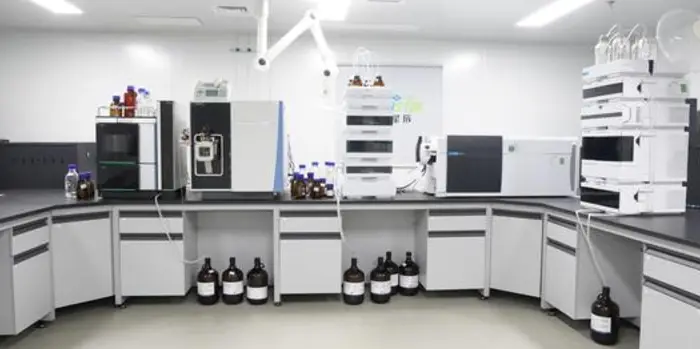
mRNA vaccines demand unprecedented sterility control — not just during formulation, but especially at the final aseptic filling stage. At this step, the active ingredient is transferred into vials or syringes under ISO Class 5 (Class 100) conditions. Any particulate ingress, microbial contamination, or surface shedding from the cleanroom envelope can compromise batch integrity and regulatory compliance. That’s why the modular laboratory buildings used for these facilities rely on seamless, non-shedding, chemically resistant construction — starting with the cleanroom wall. Unlike traditional stick-built walls, modern cleanroom wall panel systems integrate welded seams, embedded utilities, and electrostatic-dissipative finishes to eliminate harborage points. The cleanroom ceiling panel must match this performance: flush-mounted, gasket-sealed, and rated for high-velocity laminar airflow without vibration-induced particle release. For rapid deployment and validation certainty, prefabricated clean room sandwich panel solutions are now standard — offering consistent thickness, thermal stability, and certified non-porous surfaces across all six sides.
Why Modular Cleanroom Construction Accelerates Vaccine Manufacturing Readiness
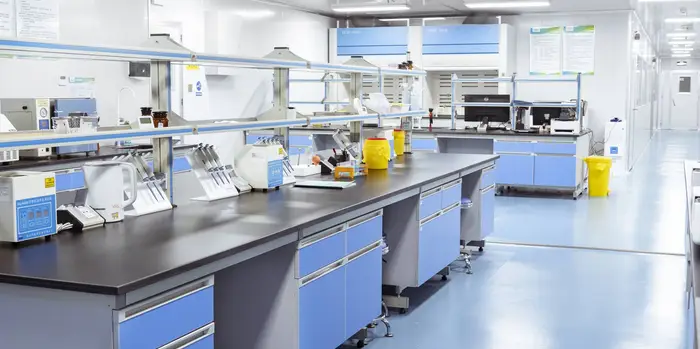
Time-to-operation is mission-critical when scaling mRNA production — and modular cleanroom construction cuts commissioning timelines by up to 40%. Pre-engineered cleanroom wall and cleanroom ceiling panel assemblies arrive fully tested, labeled, and ready for dry-fit assembly — eliminating on-site welding, curing delays, or field-adaptation errors. This precision directly supports aseptic filling line qualification: every joint, penetration, and surface finish is traceable and validated before first air turnover. Leading manufacturers now specify clean room sandwich panel cores with antimicrobial stainless steel facings and polyurethane insulation — ensuring structural rigidity, fire resistance (ASTM E84 Class A), and zero VOC off-gassing. When paired with integrated FFUs, pass-throughs, and gowning modules, these systems deliver full GMP-compliant environments in weeks — not months. For engineering teams sourcing turnkey solutions, the convergence of speed, repeatability, and regulatory confidence makes modular architecture the de facto standard for next-generation biologics manufacturing.