






Cleanroom Sandwich Panels
PU cleanroom panel
In Malaysia food & beverage innovation hubs and dairy processing lines, NSF/ANSI 169-compliant wall systems prevent biofilm buildup. Our Malaysia Cleanroom wall panels feature seamless coving, IP65-rated electrical penetrations, and steam-cleanable joints — supporting HACCP and HALAL certification audits.
Request a Free Quote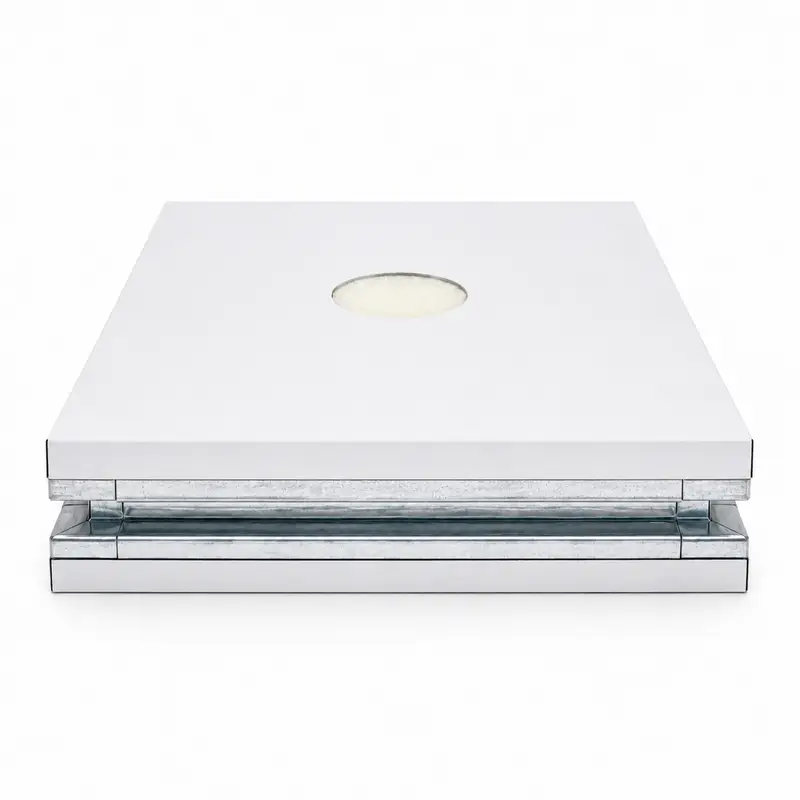
PU Cleanroom Panel: Hygienic Insulated Walls for Food & Pharma
The PU cleanroom panel suits food & beverage, dairy and pharmaceutical lines where NSF/ANSI 169-compliant wall systems prevent biofilm build-up. Our Malaysia cleanroom wall panels feature seamless coving, IP65-rated penetrations and steam-cleanable joints — supporting HACCP and HALAL audits.
As experienced hpl panels manufacturers, we offer it alongside the clean room aluminum honeycomb panel, EPS cleanroom panel and HPL sandwich panel ranges.
PU Cleanroom Panel Specifications
Standard configuration for the Wonclean PU cleanroom panel. Thickness, facing and joint system are all customizable to project and cleanroom classification requirements.
| Panel type | Closed-cell PU-core aluminum-skinned sandwich panel |
|---|---|
| Core material | Rigid closed-cell polyurethane (PU) |
| Surface finish | 0.5 mm anodized aluminum (RAL 9006 / 9016) |
| Standard thickness | 50 / 75 / 100 mm |
| Thermal conductivity (λ) | ≈ 0.022 W/m·K |
| Fire rating | EN 13501-1 Class A1 (non-combustible) |
| Joint system | Cam-lock + silicone gasket (ISO 5–7 compliant) |
| Ceiling load capacity | up to 120 kg/m² (with reinforcement) |
| Penetrations | IP65-rated electrical penetrations |
| Hygiene | Seamless coving · steam-cleanable joints |
| Cleanliness grade | ISO 14644-1 Class 3–8 ready |
Values shown are standard/representative configurations. Confirm final certified figures (fire test report, load rating, U-value) against the project datasheet before specification — Wonclean issues a stamped datasheet with every quotation.
PU Cleanroom Panel Construction
The rigid closed-cell PU core is the engineering secret. With a low 0.022 W/m·K thermal conductivity it eliminates cold bridging and cuts HVAC load up to 18%, while non-porous aluminum skins and gasketed cam-lock joints form a seamless, steam-cleanable cleanroom envelope.
Why Choose Our PU Cleanroom Panels
Superior insulation
Low 0.022 W/m·K thermal conductivity minimizes cold bridging and reduces HVAC load by up to 18%.
Zero off-gassing
Non-porous surfaces resist microbial adhesion and protect contamination-sensitive processes.
Aggressive-clean ready
Withstands harsh disinfectants and steam cleaning with steam-cleanable, sealed joints.
Strong ceiling spans
Up to 120 kg/m² ceiling load capacity (with reinforcement) for walk-on and service-heavy designs.
Rapid, dust-free install
Cam-lock modular assembly speeds installation with minimal downtime and seamless coving.
Safe penetrations
IP65-rated electrical penetrations keep service entries sealed and cleanroom-compliant.
PU Cleanroom Panel Applications
Specified as cleanroom wall panels, ceiling panels and partition systems across regulated and high-precision industries. See real cleanroom project case studies or browse the full cleanroom product range.
Get a project-specific quote in 24 hours
Send your cleanroom classification, floor area and finish requirements. Our Malaysia-based engineering team replies with a stamped datasheet, fire certificate and pricing — 7×24 technical support by email, phone or WhatsApp.
Request a Free Quote Chat on WhatsApp- 1 What is the proper procedure for using an air shower?
- 2 What Are the Core Materials and Specifications for Clean Room Panels?
- 3 How to Identify Reliable Manufacturers and Suppliers for Wall Systems?
- 4 What Distinguishes Partition Walls from Standard Partitioning Systems?
- 5 Specialized Panels for Green Energy and Solar Film Production?
- 6 Understanding Pricing Factors and Partition System Configurations?
- 7 How to choose the right door for a controlled environment?
- 8 Which wall panels offer the best protection against damage?
- 9 How does air purification impact clean room efficiency?
What is the proper procedure for using an air shower?
Enter, close outer door completely, stand in center, slowly rotate 360 degrees with arms raised for thorough coverage, wait for preset time (15-30 seconds), then open inner door and enter clean area
What Are the Core Materials and Specifications for Clean Room Panels?
Selecting the correct clean room panel material is critical for maintaining ISO standards across industries. Options include rock wool and aluminum. Detailed clean room panel specifications cover thickness, fire resistance, and surface smoothness. High-quality Clean room panels ensure structural integrity while meeting stringent environmental controls required for precision manufacturing processes.
How to Identify Reliable Manufacturers and Suppliers for Wall Systems?
Evaluating clean room panel manufacturers requires assessing certification records and capacity. A reputable clean room panel supplier provides support for integrating the clean room panel wall system into facilities. Teams should verify compliance with international standards before procurement. Proper selection ensures durability and minimizes maintenance costs across aerospace and automotive sectors.
What Distinguishes Partition Walls from Standard Partitioning Systems?
A clean room partition serves as a standalone divider, whereas a clean room partition wall offers structural support. Advanced clean room partitioning systems allow modular reconfiguration without compromising cleanliness. Solutions are vital for data centers and labs requiring flexible layouts. Installation must adhere to strict sealing protocols to maintain pressure differentials effectively.
Specialized Panels for Green Energy and Solar Film Production?
Facilities focusing on sustainability require clean room panels for green energy manufacturers designed with anti-static properties. Similarly, clean room panels for solar film manufacturers demand ultra-low outgassing materials. Using specialized clean room partition panels ensures product yield remains high. These support rigorous cleanliness classes needed for photovoltaic and battery production lines.
Understanding Pricing Factors and Partition System Configurations?
The clean room panel price varies based on material density, fire rating, and dimensions. A comprehensive Clean Room Partition System includes doors and profiles affecting budget. Comparing different clean room partition systems helps optimize costs without sacrificing performance. Food and beverage sectors prioritize washability, influencing final selection and expenditure planning for construction projects.
How to choose the right door for a controlled environment?
Selecting an aluminum clean room door depends on traffic flow and pressure requirements. Proper Aluminum frame door Design ensures airtight sealing to maintain pressure differentials. For high-traffic areas, automatic clean room doors reduce contamination risks by minimizing physical contact during entry and exit processes in critical zones.
Which wall panels offer the best protection against damage?
Aluminum Clean Room Wall Panels are engineered for impact resistance and easy cleaning. The Aluminium honeycomb gypsum panel combines fire resistance with structural stability. An Anti-fold special panel further enhances durability in corners, ensuring long-term performance without compromising the sterile conditions required for pharmaceutical or electronic manufacturing.
How does air purification impact clean room efficiency?
Effective air purification is critical for maintaining ISO standards. High-quality air filter units remove particulates from the circulation system. Large scale air purification projects require detailed planning regarding airflow patterns. Integration with HVAC systems ensures consistent environmental control. Monitoring particle counts validates effectiveness. Upgrading filtration media enhances safety and product quality within sensitive zones.
